
 Home
Home  Booking
 Chat Now
  Call Us
 Blog
Protect Your Feet
Replace on Time

Your Diabetic Shoes Have an Expiry Date – Here's How to Know It's Time
 Medically reviewed by: Dr. Tom Babu, Consultant Diabetologist & Endocrinologist - Written by Riya Yacob - Updated on 13/8/2025
In India, every single minute, one person loses a foot to diabetes-related complications. This is a heartbreaking reality, but the good news is that much of it can be prevented with proper care. One important step in prevention is wearing diabetic footwear designed to protect sensitive feet from injury and pressure-related problems.
Over the last few years, more diabetic patients have started using these shoes, mostly on the advice of their doctors. Increased awareness about diabetic foot care has encouraged people to invest in high-quality footwear. But there’s one fact many people miss out on, and that is diabetic shoes also have an expiry date. If you are wearing your diabetic shoes for years without thinking about replacement, you might unknowingly be putting your feet at risk.
How Long Do Diabetic Shoes Last?
On average, most diabetic shoes can be used for up to one year. There is no set rule for how long your shoes will last, and the actual lifespan will depend on how often you wear them, how you walk, and the environment in which they are used.
For example, if you wear them daily in a rainy or humid climate, such as during Kerala’s monsoon season, the wear and tear may be faster. In such cases, the cushioning and pressure-relief features inside the shoe can weaken after just 8 to 9 months.
Signs It’s Time for a Diabetic Shoes Replacement
If you fail to take care of your footwear, note that a worn-out pair of shoes can lead to blisters, wounds, and pressure sores. The following are some signs it’s time to replace them:
Loss of cushioning: If the shoes no longer feel soft and supportive for your feet, there is a chance that the insole might be worn out.
Increased foot discomfort: If pain or soreness returns, it is a sign that the shoes are no longer good enough to provide proper foot protection.
Visible wear and tear: There is always the need for foot protection to be compromised if there are cracks, loose stitching or an improperly shaped structure.
Uneven pressure: If you feel pressure in new spots or notice redness after wearing the diabetic footwear, it could be due to worn-out insoles.
Should You Replace the Whole Shoe or Just the Insole?
Sometimes, the outer part of the shoe may still look fine, but the insole has lowered pressure. In such cases, doctors will suggest replacing just the insole rather than buying a new pair of diabetic shoes.
However, if your foot condition or shape has changed since your last fitting, or if the shoe has other structural issues, a full shoe replacement is the better choice. To ensure the footwear is still perfect, the safest approach is to have your shoes and feet assessed annually by a doctor.
Diabetic Shoes Care Tips
Following these diabetic shoe care tips can help you get the most out of your footwear while keeping your feet healthy:
- Use your diabetic shoes mainly for walking and everyday activities, and if they get wet in the rain, dry them thoroughly before the next use.
- In order to avoid material damage, you should keep your shoes clean and in good condition.
- Avoid exposing them to extreme heat, and if possible, avoid leaving them in direct sunlight for long periods.
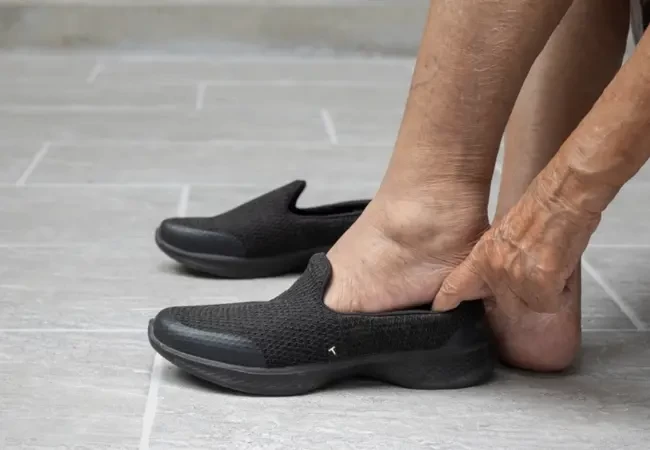
- Use a shoehorn when wearing them to prevent damage to the heel area.
- Rotate between two pairs if possible, so each gets a break.
Why Timely Replacement Matters
Continuing to wear them past their useful life could lead to ulcers, infections, and serious foot complications. This is especially problematic for people with nerve damage or poor circulation.
Continuing to wear them past their useful life could lead to ulcers, infections, as well as serious foot complications. This is especially problematic for people with nerve damage or poor circulation.
Best Diabetic Foot Care
If you have any doubts about whether it is time to replace diabetic shoes today, a diabetic shoe specialist would be your best choice. As a leading diabetes care hospital in Kerala, Silverline Hospital help you understand your health condition and provides the required treatment. Our expert team will be able to assess your diabetic footwear, check for any foot problems, and offer you advice on whether to replace or repair the shoes. With the right medical care and timely shoe replacement, you can prevent foot problems and walk comfortably.
Conclusion
You might have already understood that good diabetic shoes are very important in protecting feet. It is important to remember that they will not last forever and these diabetic shoes usually need to be changed within a year and sometimes earlier. How often to change diabetic shoes highly depends on how much you use them. In order to keep your shoes in good shape, it is advisable to have them checked by a doctor at least once a year.
Your feet deserve the best care possible. If you notice any kind of discomfort, worn-out cushioning, or any other signs of damage, it is important to check. Consult the experts at Silverline Hospital for a professional assessment and keep your steps safe.
Frequently Asked Questions (FAQs)
- How often should I replace my diabetic footwear?
A: Most people need to replace their diabetic shoes every 8 to 12 months, and this can vary depending on usage as well as footwear condition. - Is it possible to replace the insole instead of buying new diabetic shoes?
A: Yes, you can replace it if the outer part of the shoes is still in good condition and your foot measurements have not changed. - What are the signs that my diabetic shoes are damaged?
A: Loss of cushioning, visible damage, and increased foot discomfort are common signs of it. - Are diabetic shoes necessary if I don’t have foot problems yet?
A: Yes. They help prevent complications before they start, especially for people with diabetes. - How do I care for my diabetic shoes to make them last longer?
A: Keep them clean and dry, avoid extreme heat, and use them only for regular walking, not heavy activity. - Can I wear my diabetic shoes during the rainy season?
A: Yes, but heavy exposure to moisture can shorten their lifespan. Dry them thoroughly after use.
More Blogs
-

Don't Ignore the Tingling: Understanding Diabetes-Related Nerve Problems
Discover the signs of diabetic nerve damage, including tingling, numbness and burning feet. Learn about diagnosis, treatment and nerve care.
-

Can Hypothyroidism Cause Constipation? What You Need to Know
Learn how hypothyroidism causes constipation, which thyroid tests help diagnose it, and how treatment, fibre, hydration and lifestyle changes can help.
-

Hypothyroidism Symptoms: Is Constant Fatigue a Sign of Thyroid Problems?
Discover common hypothyroidism symptoms and learn when constant fatigue may be a sign of thyroid problems.
-

Recognizing Diabetes Symptoms: Early Signs and When to Get Tested
Learn about diabetes symptoms, early warning signs, common risk factors, and when to get tested. Understand what changes to watch for and why early testing can help with timely diagnosis and care.
-

Don't Ignore Hair Loss: Hormonal Changes and Thyroid Problems Could Be the Cause
Learn how hormonal changes and thyroid problems can cause hair loss, the signs to watch for, and when to seek medical evaluation.



Are You at Risk of Diabetes? Find Out Instantly
Early detection can make all the difference
Check My Risk Now!